Clutter has a way of arriving quietly. It does not announce itself with fanfare or ask for permission. It accumulates in the margins of a busy life: the stack of mail on the kitchen counter that grows a little taller each day, the shopping bags tucked beside the closet door with every intention of being dealt with later, the children's toys that migrate from room to room like a slow, colorful tide. Before you know it, you are standing in your own home feeling like a guest who does not quite know where anything belongs.
If this resonates with you, take a breath. You are not disorganized. You are not lazy. You are simply living in a space that has not been given the systems it needs to support the pace and complexity of your real life. At Swoon Spaces, we have spent years helping clients across New York City, Los Angeles, and Austin transform homes that felt chaotic into sanctuaries that feel effortless. And the truth we return to again and again is this: combating clutter is not about owning less. It is about owning intentionally and creating an environment where every item has a purpose and a place.
Here are ten proven strategies we use with our clients every day, strategies that go far beyond the surface-level advice of "just throw things away." These are the methods that create lasting change.
1. Identify Your Clutter Patterns Before You Touch a Single Item
Most people begin a decluttering project by pulling everything out of a closet and sorting it into piles. That approach has its place, but it skips the most important first step: understanding why the clutter accumulated in the first place. Without this awareness, you will organize beautifully on a Saturday and find yourself in the same situation three months later.
We ask every client to spend a week simply observing their home. Where does clutter naturally gather? Is it the entryway, because there is no designated landing zone for bags, keys, and coats? Is it the kitchen counter, because the mail has nowhere else to go? Is it the bedroom, because the closet is so overstuffed that getting dressed feels like an archaeological excavation?
Clutter patterns are remarkably personal, and they reveal the specific gaps in your home's infrastructure. Once you can see those gaps clearly, the solutions become almost obvious. A beautiful tray on the entryway console, a wall-mounted mail sorter, a closet edit that reduces your wardrobe to only what you genuinely wear. The fix is rarely about willpower. It is almost always about design.
2. Embrace the One-In, One-Out Rule
This is the single most powerful daily habit we teach our clients, and it is elegantly simple: every time a new item enters your home, one existing item of similar type must leave. A new blouse means an older one goes to donation. A new kitchen gadget means one you never use finds a new home. A new book means one from the shelf gets passed along to a friend.
The beauty of this rule is that it does not require dramatic purges or marathon organizing sessions. It operates quietly in the background of your life, maintaining equilibrium without effort. Over time, it also transforms the way you shop. When you know that every purchase requires a corresponding release, you become far more intentional about what you bring through your front door.
"Clutter is not a storage problem. It is a decision problem. Every item sitting in limbo represents a decision you have not yet made, and the weight of all those unmade decisions is what makes your home feel heavy."
3. Create Dedicated Landing Zones
In our experience, roughly seventy percent of visible household clutter can be traced to items that do not have a designated home. They float from surface to surface because there is nowhere specific for them to go. The solution is what we call landing zones: intentionally designed stations throughout your home where specific categories of items belong.
The most impactful landing zones we design for our clients include an entryway station with hooks for coats, a tray for keys and wallets, and a small basket for outgoing items like packages and dry cleaning. In the kitchen, we create a command center near the entrance, typically a narrow console or wall-mounted system, that captures mail, school papers, and anything requiring action. In the bedroom, a valet tray on the nightstand and a designated chair or hook for the outfit worn that day prevent clothing from draping over every surface.
The key to a successful landing zone is that it must be beautiful enough that you want to maintain it and convenient enough that using it requires zero extra effort. When the design is right, putting things away becomes the path of least resistance rather than a chore.
4. Tackle Paper Clutter with a Three-Folder System
Paper is one of the most insidious forms of household clutter. It arrives daily, it multiplies silently, and it carries just enough potential importance that most people are afraid to discard it. The result is towering stacks on kitchen counters, overstuffed desk drawers, and that vague anxiety that something essential is buried somewhere in the chaos.
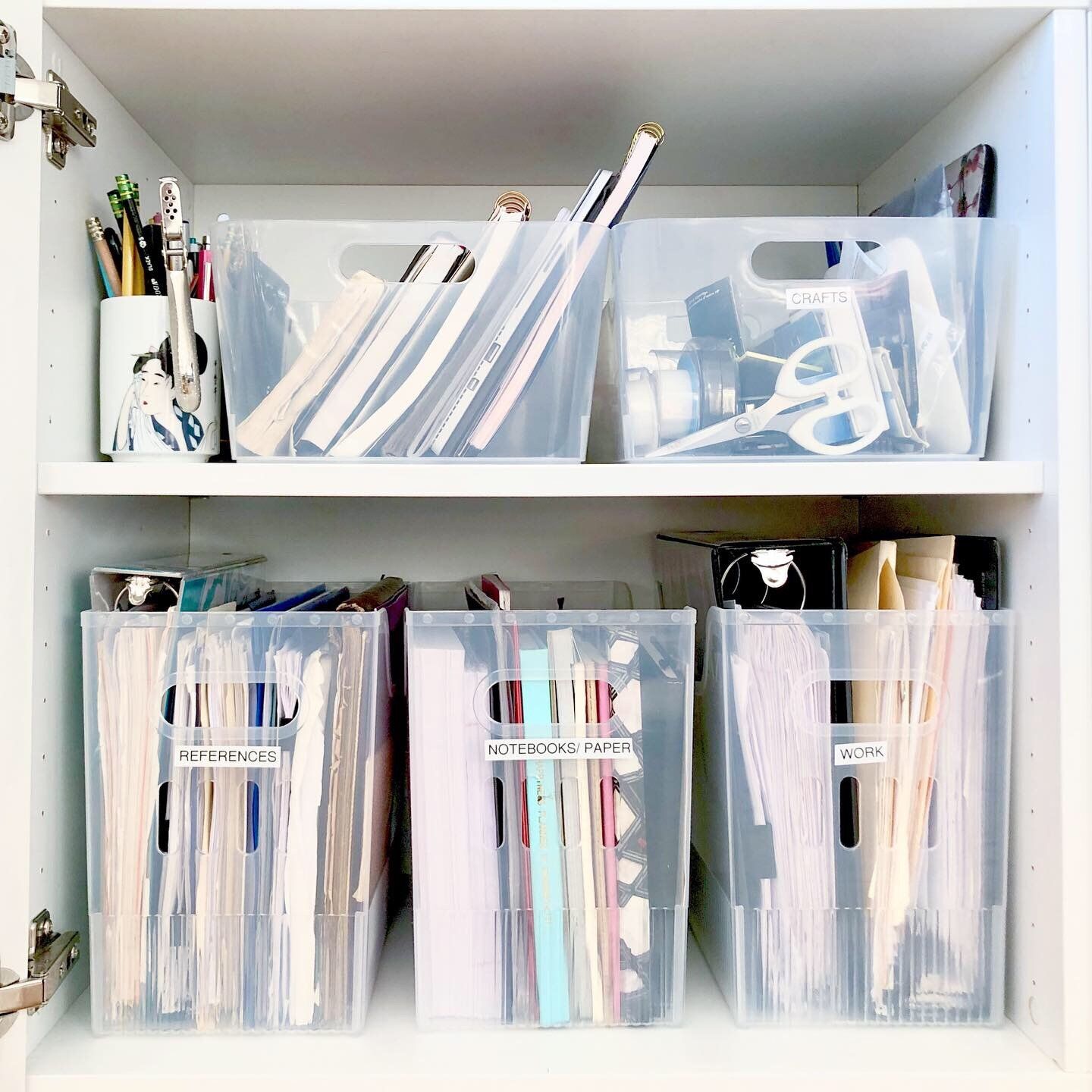
We recommend a deceptively simple three-folder system. The first folder is labeled "Action Required" and holds anything that needs a response: bills to pay, forms to sign, invitations requiring an RSVP. The second folder is "Waiting On" for documents in limbo, such as insurance claims, pending orders, or items sent for repair. The third folder is "To File" for documents that need permanent storage, like tax records, contracts, and medical paperwork.
Everything else gets recycled immediately. Catalogs, promotional mailers, expired coupons, newsletters you will never read. Be aggressive. The papers you truly need represent perhaps five percent of what comes through your mail slot. Once a week, spend ten minutes processing each folder, and you will never have a paper pile again.
5. Edit Your Wardrobe Seasonally
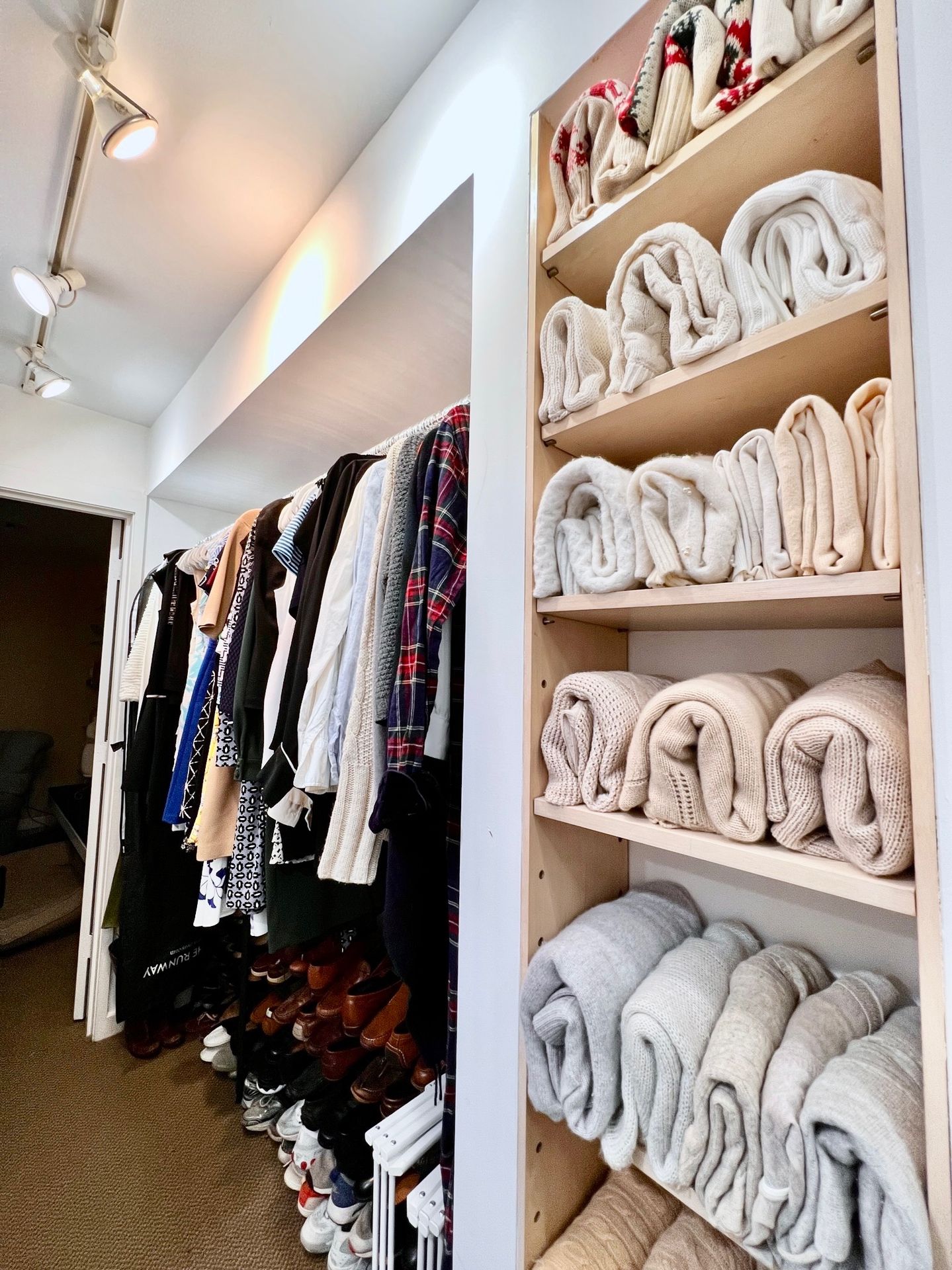
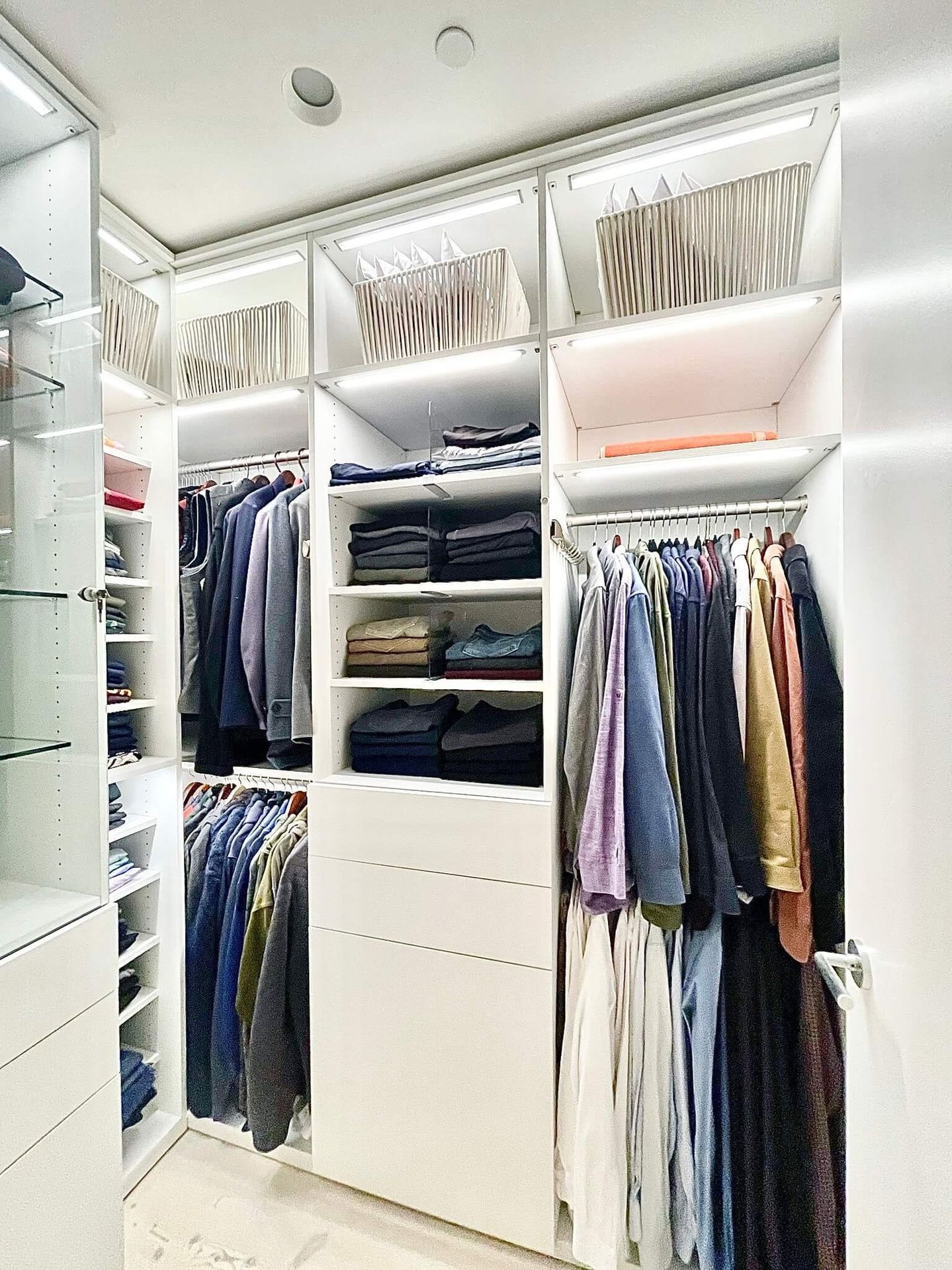
Closets are one of the most emotionally charged spaces in any home, and they are also where some of the most significant clutter hides. We have worked with clients whose closets contained clothing from three different decades, multiple sizes, and at least one lifestyle they no longer live. The weight of all those unworn garments does more than consume physical space. It creates a subtle but persistent sense of failure every time you get dressed.
Our approach is a seasonal wardrobe edit, conducted four times a year at the turn of each season. As you transition your wardrobe from summer to fall or winter to spring, handle every piece. Ask yourself three questions: Have I worn this in the past twelve months? Does it fit my body as it is right now? Does it reflect the life I am currently living? If the answer to any of these is no, it is time to let it go with gratitude for the role it once played.
What remains after a thoughtful edit is a curated wardrobe of pieces you genuinely love and reach for with confidence. Getting dressed becomes a pleasure rather than a negotiation, and your closet transforms from a source of stress into something that feels almost boutique-like.
6. Implement the 90/90 Rule for Indecisive Moments
Even with the best intentions, there will be items that stump you. The kitchen appliance you used twice but cost a small fortune. The gift from a dear friend that does not suit your taste. The exercise equipment that represents a version of yourself you have not been in quite some time. For these moments of genuine indecision, we use what we call the 90/90 rule.
Ask yourself: Have I used this in the last 90 days? Will I use it in the next 90 days? If the honest answer to both questions is no, you have your answer. This framework removes the open-ended ambiguity that keeps people clinging to possessions indefinitely. It replaces "but I might need it someday" with a concrete, bounded evaluation that respects both your space and your honesty.
"The most beautiful homes we have ever organized share one quality: restraint. Not emptiness, not minimalism for its own sake, but a thoughtful curation where every object earns its place."
7. Rethink Your Storage Solutions
There is a common misconception that the solution to clutter is more storage. More bins, more baskets, more shelving units from the home goods store. In reality, adding storage to a cluttered home often makes the problem worse. It gives clutter more places to hide, which means it takes longer to find what you need and even longer to realize what you no longer use.
The Swoon Spaces approach to storage is fundamentally different. We believe in fewer, better containers that are sized precisely for their contents and positioned exactly where they are needed. A single row of matching acrylic bins in the linen closet. A set of handsome leather boxes on the office shelf. A custom drawer insert that gives every utensil its own compartment. When storage solutions are beautiful, purposeful, and correctly scaled, they become part of your home's design rather than an afterthought stuffed into the back of a cabinet.
Before purchasing any storage product, we encourage clients to complete the decluttering process first. Organize what you are keeping, measure the space precisely, and only then invest in the containers and systems that will maintain your new order. This sequence, edit first and contain second, is essential. Otherwise, you are simply organizing your clutter into prettier boxes.
8. Digitize What You Can
We live in an era where an enormous amount of physical clutter can be eliminated through thoughtful digitization. Stacks of recipes can become a curated Pinterest board or a digital cookbook app. Boxes of photographs can be scanned and stored in the cloud, preserved with better quality than they would enjoy fading in a humid basement. Filing cabinets full of documents can be replaced by a well-organized digital folder structure, with physical copies retained only for items that legally require originals.
Children's artwork is one area where digitization offers a particularly elegant solution. Rather than keeping every finger painting and construction-paper masterpiece, photograph each piece, compile them into annual photo books, and keep only the handful of originals that are truly extraordinary. The memories are preserved beautifully, the creativity is honored, and your home is not slowly consumed by a paper trail that grows by the school year.
The key to successful digitization is doing it consistently rather than letting it become its own backlog. Set a weekly fifteen-minute appointment with yourself to scan, photograph, and file. Small, regular efforts prevent the digital project from becoming just as overwhelming as the physical clutter it was meant to replace.
9. Establish a Daily Five-Minute Reset
Every professional organizer will tell you that the difference between a home that stays organized and one that reverts to chaos within weeks is maintenance. And the most effective maintenance habit we have found is almost absurdly simple: a five-minute reset at the end of each day.
Choose a time that works naturally within your routine, perhaps after the children are in bed, or just before you settle in for the evening. Set a timer for five minutes and move through your main living spaces returning items to their designated homes. Hang up the jacket that ended up on the chair. Clear the dishes from the coffee table. Stack the magazines, put away the toys, and wipe down the kitchen counter.
Five minutes is not enough to deep-clean or reorganize. That is precisely the point. It is a maintenance ritual, not a project. It prevents the small daily accumulations from compounding into the overwhelming mess that triggers the paralysis we discussed earlier. When you wake up to a reset home each morning, you start the day with a sense of calm control that influences everything that follows.
10. Know When to Call in the Professionals
There comes a point in many people's relationship with their home where the clutter has reached a scale that feels genuinely insurmountable on your own. Perhaps you have tried multiple times to get organized only to find yourself back where you started. Perhaps a major life transition, a move, a new baby, a renovation, a loss, has disrupted whatever systems you once had. Perhaps you simply recognize that your time and energy are better invested elsewhere, and you would rather have experts handle the heavy lifting.
This is exactly the moment Swoon Spaces was built for. Our team brings not only years of expertise and refined systems but also the emotional objectivity that is nearly impossible to maintain when sorting through your own belongings. We have guided clients through every scenario imaginable, from a single afternoon closet edit to a full-home transformation spanning multiple weeks. And what our clients tell us, consistently, is that the experience felt less like a chore and more like a gift they gave themselves.
We handle every detail: the planning and strategy, the product sourcing and procurement, the hands-on organizing and installation, and the final styling that makes your space feel like it belongs in a design magazine. We coordinate donations, arrange consignment for valuable items, and ensure that everything leaving your home is handled responsibly. Most importantly, we work at your pace, with your comfort, and in alignment with the way you actually live.
"Your home should be your sanctuary, not your source of stress. When your space is working for you instead of against you, every part of your life feels lighter."
The Bigger Picture: Why Combating Clutter Matters
The benefits of a clutter-free home extend far beyond aesthetics. Research consistently shows that cluttered environments elevate cortisol levels, impair focus, disrupt sleep quality, and strain relationships. Conversely, organized spaces have been linked to improved mood, greater productivity, healthier eating habits, and even more restful sleep. When you combat clutter, you are not simply tidying up. You are investing in your mental health, your relationships, and the quality of your daily experience.
At Swoon Spaces, we have witnessed this transformation hundreds of times. We have seen clients who dreaded coming home begin to linger in their living rooms. We have seen couples who argued about the state of their apartment start cooking together in their newly organized kitchen. We have seen children who could never find their school supplies become more independent and confident when their space supported their routine. The ripple effects of an organized home are profound and deeply personal.
Wherever you are on your decluttering journey, whether you are contemplating that first drawer or ready to reimagine your entire home, know that every step forward matters. Start with one strategy from this list. Let the momentum carry you to the next. And if you reach a point where you want a partner in the process, we would be honored to help you create a home that makes you swoon every time you walk through the door.